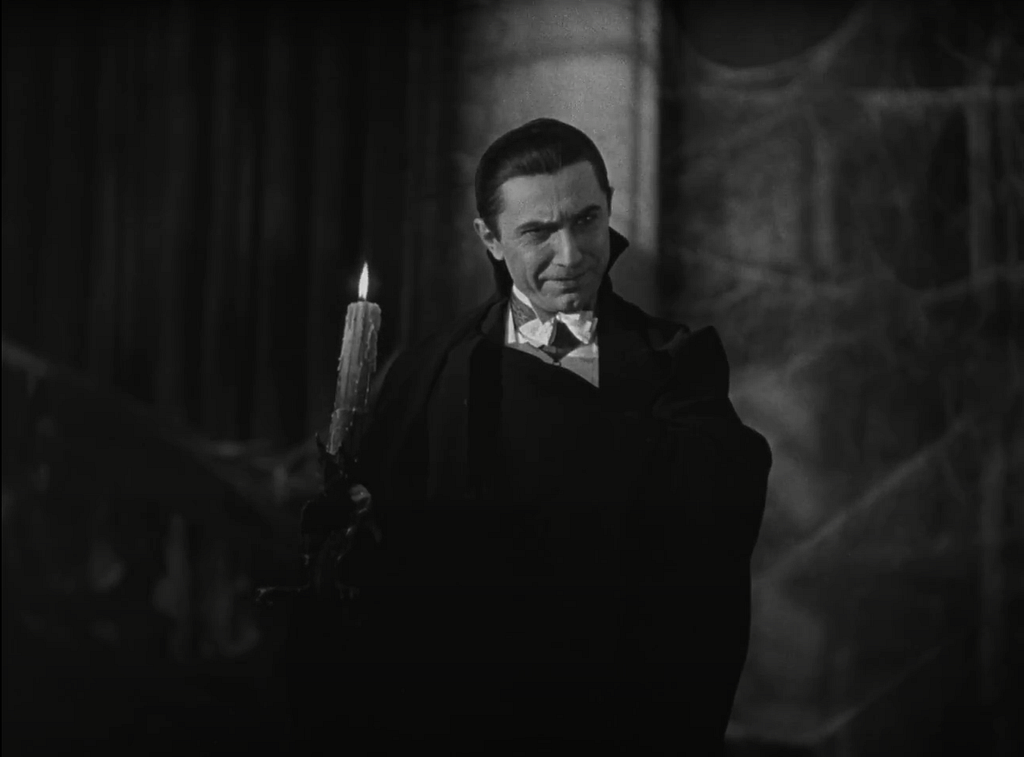
With my previous review, I critiqued how the author defined and identified vampires in his study. As I said in the review, his analysis was far too broad and only served his larger narrative of occultism and early cinema. With such a critique, I feel I’m responsible for providing a definition of my own. It would be important to note that this is my current framework, and that even my own personal beliefs are subject to change with new ideas and evidence. I can always make an update in the future if that change occurs. With all that said, I am going to cover Carl Jung’s Shadow archetype, why it applies to vampires, and how I use this framework to identify vampires in film. It is not a science, and it requires a lot of context and case-by-case analysis, but I find that this framework has allowed me to look at vampirism in a truly fantastic way.
the Shadow
I must give formal credit to Mary McFadden for the excellent literary connection between vampires and Carl Jung’s archetypes, as she perfectly explains the vampire within the framework of myth and folklore. McFadden said it best that:
every personality has a dark side that is the gateway to the unconscious mind and dreams. Through this gateway, the archetypal Shadow figure enters our dreams. Myths are not themselves archetypes. They are created by archetypes. the Shadow archetype is the hidden part of the human psyche—the part we fear for its obscurity. This fear causes our mind to create myths to represent this hidden part of our psyche (Jung, 1968, p. 38). Following Jung’s logic, a vampire cannot be an archetype in itself; instead, it is a myth born of the Shadow archetype.1
But this brings up a multitude of questions. What separates vampires from other folkloric creatures? To differentiate vampires from other folkloric creatures, we need to look at the purpose of these creatures. Additionally, there needs to be a level of fluidity when it comes to this analysis. Vampires can and do blend into other types of creatures, but we need to be careful as to not lose sight of what vampirism targets and what it means in myth and storytelling. As a mythological entity, vampirism was an answer to post mortem behaviour and disease, as seen in the Serbian examples of Petar Blagojevich and Arnold Paole. With this in mind, we can start to differentiate the vampire from say the lycanthrope (werewolf) or the hags and witches that became solidified as gothic creatures in the Romantic era. While the witch is a misogynistic stereotype of women both young and old, and werewolves are a complex relationship between people and nature as well as paganism versus Christianity, the vampire predominantly focuses on death as a focal point, and becomes a turning point for more malevolent intentions. Another important distinction is of course the need to drink blood. While real vampires were simply going through post mortem processes of decomposition, the literary and cinematic vampire drink blood as a violent and suggestive metaphor for their relationship to others. This is unique to the vampire, and is what makes vampire fiction so compelling. It becomes a curse, an addiction, a form of capital, which allows the exploration of things that are often times obscured.
Who is a Vampire, Then?
When trying to define something with so many different interpretations, it becomes ever more difficult to say with any certainty if any of the examples are vampires at all. This is why some authors will argue certain media is definitely vampire fiction, while others will deny it outright. I am going to give the things I look for in a vampire story which will help identify not only if something is a vampire, but what type of vampire as well.
the Shadow framework allows us to look at a vampire, and find out what is haunting both the author and the culture at large. To use the epochal example, Dracula is a multitude of things that both Bram Stoker and nineteenth century British society feared. The Count is ancient, is a member of the aristocracy, uses pagan magics, he has many wives, and he is Eastern European. Dracula’s otherness is apparent, as he commits sinister acts and is generally creepy. And as a result, we can glean what the British psyche was at the time. We see a fairly xenophobic and Christian type of society, one which sees the rising growth of industry and corporations start to rival those old nobles with scary effect. But worst of all, is a foreigner coming to colonise the British Isles. The Empire was being threatened by the Count, as he planned to bring his tyranny not only from a distant and foreign land, but from an archaic time. This is a story as much about xenophobia as it is sexual repression and fear of the past, one where modernity is threatened by old institutions.
Reciprocally, we can use the Shadow to identify those who are not villains of their cultures. As we see in the twentieth century, there is a shift in the way we use vampires to represent otherness. These more Sympathetic vampires are identified as not “normal,” and their undead transformation marks a change that separates them from the rest of society. We can look at the obvious example of the vampires in Anne Rice’s Vampire Chronicles, as they popularised this type of vampire. While the vampires in this series keep a lot of the semantical aspects of vampirism, there is more to how we as the audience should understand these characters. While the Theatre of Vampires is more close to the stereotypical vampires of folklore and literature, Rice introduces an aspect of humanity into her main cast. The main characters, Louis, Lestat and Claudia, create a family and go through the world like humans, but keep their vampirism as a secret to the rest of the world. Many have seen this secret reflect marginalised communities that perhaps are marginalised for obtuse or archaic reasons, such as homosexuality, race or religious affiliation. What truly separates Louis and the reporter who is interviewing him?
What About the Normies?
There are examples of vampirism that truly make investigating this subject difficult for even experienced vampirologists. And it typically comes with the issue of vampires not following the traditional mould of vampires in certain attributes. One such type of vampire is the Social Vampires of the 1920s. These Social Vampires, or Vamps, never explicitly drink blood or are revenants out to kill would be suitors. However, they exist as a Shadow to the traditional American culture from which they sprung. These women were known to use men for financial gain and short term pleasure, later discarding them for a new victim. While no blood is ever shown in these films, the vampirism is found in their behaviour. They seduce, lie, intimidate, and subjugate their prey, and ultimately kill them through their parasitic ways. And furthermore, Vamps represent the conservative reaction to the New Women, who would work, vote and never settle down in a traditional sense. The Vamp is the polar extreme of what a New Women can be, and is thus a danger to the social order. We use the Shadow to include Vamps in our canon of vampire fiction, and are able to glean something about how vampires change and reflect the times they are in.
Conclusion
As always, this framework is by no means the end all be all for talking about vampires. But I wanted to offer a moment to put my thoughts on the matter forward, and hopefully spark some people to investigate this philosophy as well. And if there are any holes in my argumentation, I would love to see some genuine academic pushback. With any denotative efforts, there are going to be rules and exceptions that break those rules, but it is helpful to engage in these conversations as we gain a better understanding of the materials we are studying.
- McFadden, Mary. “A History of Vampires and Their Transformation From Solely Monsters to Transformation From Solely Monsters to Monstrous, Tragic, and Romantic Figures.” Curiosity: Interdisciplinary Journal of Research and Innovation 2 (April 15, 2021). https://doi.org/10.36898/001c.22205. ↩︎
Leave a Reply